
Land, Labor, and Inheritance
The PeasantsThis thread traces the novel’s recurring link between landownership, family power, work, and the possibility of a secure life.
increasing Bearing strength in each event
 decreasing
Bearing strength in each eventdecreasingLand as Livelihood
Land as Livelihood
Material survival
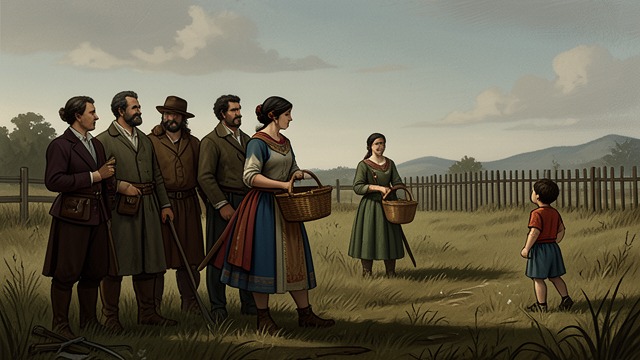
For the people of Lipce, fields mean food, work, status, and the ability to form a household.
A constrained world
Land hunger shapes marriage, labor, and family relations because the village’s boundaries offer few alternatives.
Marriage as Settlement
Marriage as Settlement
A negotiated future
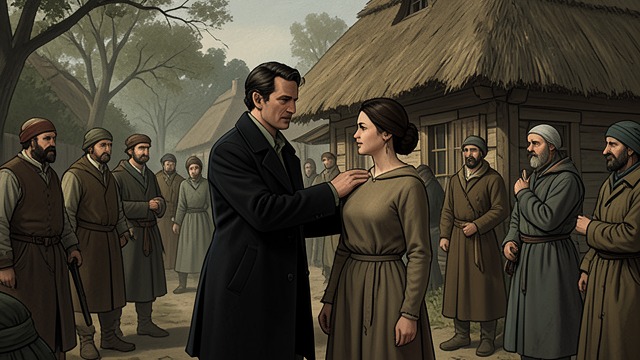
Maciej Boryna’s marriage to Jagna Paczesiówna is accompanied by a formal promise of land, making marriage part of inheritance politics.
Private feeling, public consequence
The settlement changes the balance of the household and turns intimate decisions into communal disputes over property.
The Farm’s Boundaries
The Farm’s Boundaries
Exclusion and scarcity
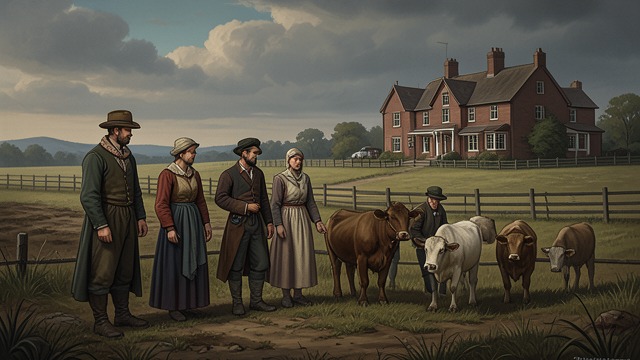
Antek’s family is driven out, while Hanka faces hunger and must sell livestock to keep her children alive.
A material hierarchy
The contrast between rich farms and landless laborers shows how ownership governs even the right to shelter and food.
Work as a Claim
Work as a Claim
Collective labor
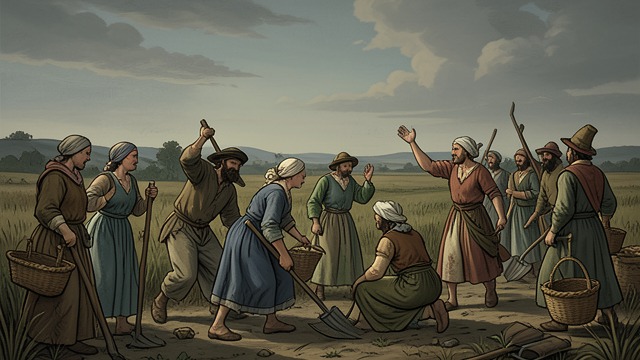
With many men imprisoned, women and poor villagers try to keep farms running; neighboring communities later help with plowing.
Ownership and recognition
The novel shows work as a source of dignity, while workers’ effort does not always bring them ownership or security.
A Field of One’s Own
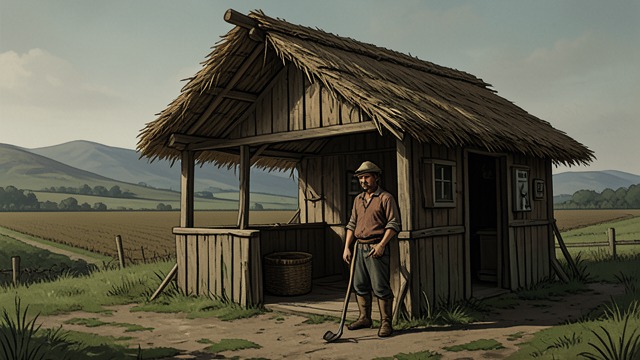
A Field of One’s Own
A small beginning
Szymek builds an independent household at Podlesie, demonstrating that access to land can make a new life imaginable.
Continuing limits
His achievement does not end land scarcity; it reveals how uncommon and costly independence remains for ordinary villagers.
early autumn
late autumn
winter
spring
summer
